Ranger Road Fire · Kansas & Oklahoma panhandle · February 2026

Disaster logistics · built by Fuzion Companies

When the fire is moving, somebody has to know where the trailers are.

Support Beacon Relief is the operational system behind a disaster response — intake, matching, dispatch, and the record of what actually happened. Licensed to nonprofit disaster-response organizations, who run it under their own name.

Live now Rancher Navy is running the Ross Fire response on Support Beacon Relief — 85,303 acres, 31% contained, Palo Pinto and Jack counties, Texas. About Rancher Navy →

How it started

Born from boots on the ground.

In February 2026, the Ranger Road Fire tore through communities across southwest Kansas and the Oklahoma panhandle — Ashland, Englewood, Knowles, Gate, and dozens of ranches in between.

Fuzion Consulting Group and Fuzion Chickasaw Group didn't watch it on the news. We drove our own trucks and trailers into the disaster zone, delivering donated hay and supplies to ranchers who had lost everything.

While working those routes we met Morgan Broome, Amy Houston Gaddis and Holli Geeslin, the founders of Rancher Navy. They were doing extraordinary work — and running an entire disaster response out of spreadsheets and a group text.

So we built them something better. Support Beacon Relief replaced the spreadsheets with secure registration, real-time dispatch and live hauler tracking, so a nonprofit can spend its energy on saving livelihoods instead of fighting logistics.
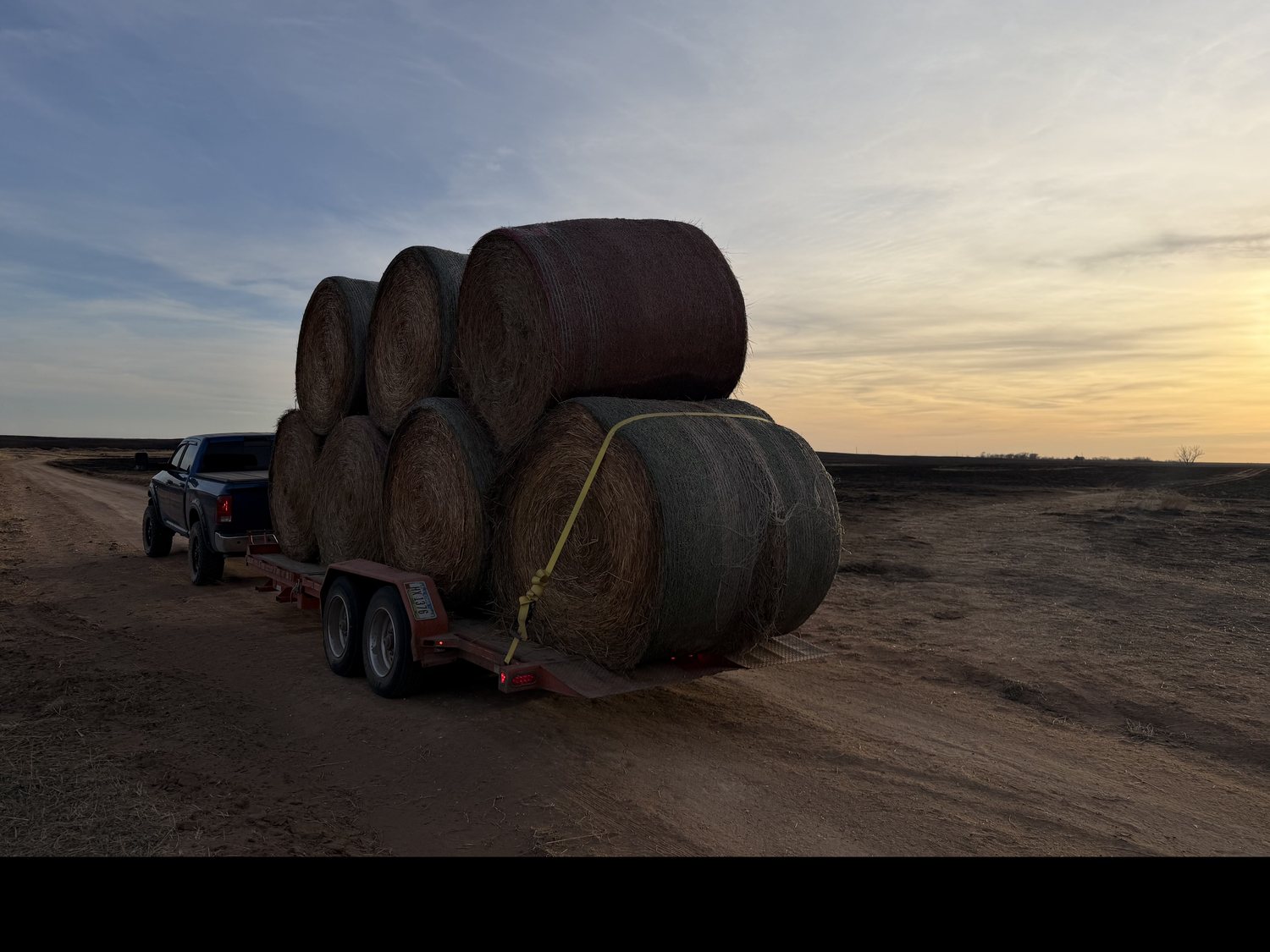

A Fuzion truck and trailer loaded with round bales at sunset on burned ground, Ranger Road Fire, February 2026
February 17, 2026
Ranger Road Fire — Fuzion on the ground, delivering hay

The platform

Replacing spreadsheets with coordinated action.

Not a CRM with a disaster theme. Every screen exists because somebody needed it during a real response — most of them during this one.

Secure registration

Every recipient, donor, hauler and volunteer registers through a verified process, and an administrator reviews each one. The people most exposed can ask for help without wondering who will see it.

Matching and dispatch

Requests on one side, supply on the other, and a board that shows what is matched, what is moving, and what is still waiting on somebody. Loads go out by text to the phone in a hauler's pocket.

Live hauler tracking

Where every rig is, filtered by state, city, coordinates or the whole country. Dispatchers know when a hauler arrives, when they drop off, and are alerted by text if one breaks down or needs help on the road.

Rapid Response

Hour zero. One authorized callout reaches every trailer in range — on board or not — and coordinates who goes where, so forty rigs don't converge on one address while another gets none.

Reporting and archive

Head moved, loads delivered, counties served — ready for a board meeting or a grant report. Every response is archived whole, so the next coordinator can open the last one instead of starting over.

Mobile apps for drivers

Native iOS and Android for the people actually moving supplies: GPS synced to the dispatch map, digital waiver, license and insurance upload, and before-and-after photos at pickup and drop-off.

How a response actually runs

Four moves, and a record at the end of each one.

The whole system rests on one idea: every offer, request, load and callout belongs to a response. That is what makes it reportable afterwards, and archivable when it closes.

1

Somebody needs help

A rancher files a request, or a coordinator files it for them over the phone. It joins the response alongside everything else.

2

Somebody can help

Donors list hay, feed, fencing, equipment. Haulers say what they can move and how far. Both sit in the same picture as the need.

3

Dispatch matches and sends

A coordinator pairs them and sends the load by text. The hauler confirms, arrives, loads, delivers — each step stamping the board.

4

The response closes

Totals, lessons learned, and acknowledgment letters for volunteers. Then it is archived, intact, for whoever runs the next one.

Always watching

Live hazards across the country.

Wildfires, storms, flooding and other hazards nationwide — official perimeters, acreage and containment from the National Interagency Fire Center, satellite detections from NASA, alerts from the National Weather Service. This is the picture a team watches when it decides where to go next.

Live feed from NASA FIRMS, NIFC, NASA EONET, and NOAA / NWS — same data a licensee watches in operations. Open full operational view on Rancher Navy →
Figures above refresh with the live feed. Hover a card on the map to isolate a layer.
This is the demonstration, not the whole thing. The marketing page shows the map, its layers and the live counts. The full operational view — sortable incident tables, browse-by-state, hazard breakdowns, and a detail page per fire with perimeter, weather and imagery — is what a licensee runs. See it live on Rancher Navy →
Six feeds, one endpoint. Your browser never talks to NASA, NOAA or NIFC directly. An aggregation service normalises everything and hands the map a single consistent payload.
One feed failing does not blank the map. Every source keeps its own last-known-good copy. If the satellite feed drops, the official incidents still draw. If the incident feed times out, everything else loads without it.
Stale data says it is stale. When a source is serving from cache, the page says so rather than passing old readings off as current.
No key, no vendor bill. The basemap needs no API key and no account. Nobody else's pricing decision can take this map away on the worst day of the year.
Named wildfires — with official perimeters, acreage and containment — from the National Interagency Fire Center (WFIGS / IRWIN). Active fire detections from NASA FIRMS near-real-time satellite readings (VIIRS), sized by intensity and clustered into distinct fires. Storms and other events from NASA EONET, with a NASA GIBS thermal overlay. Flood and severe thunderstorm alerts from NOAA / National Weather Service. Basemap tiles © Esri. Satellite detections are not confirmed incident boundaries, alert polygons change, and acreage and containment are supplied by external agencies and may be delayed. Situational awareness only — always follow local emergency management and evacuation orders.

Founding partner

Rancher Navy

Texas farm and ranch disaster relief — supporting agricultural communities through fires, flooding, severe storms and tornadoes. Founded by Morgan Broome, Amy Houston Gaddis and Holli Geeslin, they were on the ground before anyone else.

We are honored to provide the technology that powers their mission — and Support Beacon Relief is a better product because it was built beside people doing the work.

Visit Rancher Navy
Rancher Navy — Texas Farm and Ranch Disaster Relief

For nonprofits

If your organization responds to disasters, let's talk.

Support Beacon Relief is owned and operated by Fuzion Companies and licensed to nonprofit disaster-response organizations, subject to review. Your volunteers register on your site, under your name — the platform stays out of the way.

  • Your brand, not ours. Volunteers see your organization throughout. Support Beacon Relief is credited in the footer and nowhere else.
  • Your data stays yours. Recipient names, addresses and volunteer records belong to your organization and are separated from every other licensee.
  • Terms are agreed in writing, case by case. Every organization is a different size and responds to a different thing — so the conversation comes before the paperwork.
  • Sometimes the honest answer is no. If what you do doesn't look like supply logistics, we will tell you rather than sell you.

Will this still be here in three years?

It is the right question to ask about any software a nonprofit comes to depend on, and it deserves a straight answer rather than a reassurance.

Support Beacon Relief is built and paid for by Fuzion Companies — a substantial investment, made deliberately, in a product we intend to keep developing. Support Beacon Logistics, the commercial edition, is what sustains the nonprofit side.

That means the disaster-response product isn't waiting on a grant cycle or a donation drive to survive the year.

Start a conversation

The SB217™ platform

Three products, one operational core.

Relief is the first. Rescue and Logistics share the same dispatch engine, map and reporting — which is why they can be built at all, and why what we learn in one response improves all three.

Live

Support Beacon Relief

Nonprofit disaster response

Supply logistics for the days and weeks after a disaster: donors, recipients, haulers, dispatch, and the reporting a board and grantors need. In production with Rancher Navy.

Ask about a license
In development

Support Beacon Rescue

Search-and-rescue coordination

Team callout, task assignment and field coordination — the same dispatch core, for the hours when the work is finding people and animals rather than supplying them.

Register interest
In development

Support Beacon Logistics

Enterprise

The commercial edition, for organizations running continuous logistics at scale rather than episodic disaster response.

Enterprise inquiries

Get in touch

Tell us how your organization responds.

What is hard for you today is more useful to us than a feature list. No application fee, no obligation — this starts a conversation, not a contract.